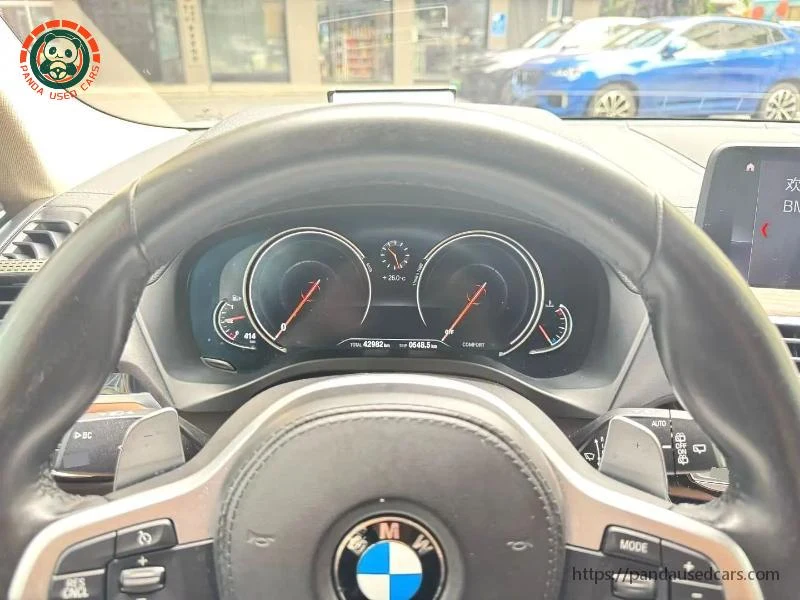
Separate the hardware from the service
Record the installed display and control equipment using the vehicle’s specification and current photographs. Then identify what the customer wants to do with it. Adjusting a local setting is different from using a connected service that depends on a provider, account or regional availability.
Keep those categories separate in the buying brief. A seller’s statement that the system works may refer only to the screen powering on. The equipment guide provides a place to distinguish installed features, demonstrated functions and unresolved dependencies before the vehicle is described to an end customer.
Demonstrate the required language and controls
Ask for a clear demonstration of the available interface language and the controls the buyer will use. Do not assume a menu shown on a different X3 is available on this one. A short recorded walkthrough should show the relevant setting and enough vehicle context to identify the candidate.
If the desired setting is not available, describe that fact rather than promising a future conversion. Any proposed change needs a defined provider, scope and explanation of what remains uncertain. Avoid confusing a translated sales description with a vehicle that has actually been configured for the customer’s use.
Test phone functions by their actual purpose
Pairing, audio, calls and any requested phone-integration features should be tested separately with a suitable device. Record the device and conditions used. One successful demonstration does not prove compatibility with every handset, software version or cable that a future user may have.
Ask whether accessories needed for the demonstrated function are included. Where a feature depends on installed hardware or an activation, identify that dependency in the offer. A buyer who can accept a limited function should state that acceptance; a mandatory function should remain unresolved until the evidence is sufficient.
Keep source-market demonstrations in context
A feature demonstrated in China is evidence of that demonstration, not automatic proof of its operation after export. Newer China-focused models deserve particular attention because equipment and services may be tailored to that market. Read the China X3 comparison when the offer concerns that body and specification context.
Ask the responsible provider about service eligibility where it matters. Do not substitute an informal workaround for a supported commitment. If destination operation cannot be established before the decision, the quotation and buyer acceptance should reflect that limitation rather than advertising the feature as unconditionally available.
Plan account and personal-data handover
Agree how the vehicle will be handed over without unrelated previous-user data or continued access. The responsible owner or provider should perform any required account steps through legitimate processes. An importer should not request another person’s password as a shortcut to retaining an online feature.
Ask what the receiving user will need to activate or use the agreed functions. Keep this separate from the physical delivery checklist, while linking both records to the vehicle. The handover guide helps make responsibility clear when the commercial parties, logistics provider and receiving dealer are different organisations.
Avoid a demonstration with an unclear vehicle
When several X3 candidates are under review, ask the supplier to connect the digital demonstration to the correct vehicle. A recording that shows only a screen may be difficult to match later. Include a candidate reference or other suitable context without collecting unnecessary personal information.
The demonstration should also identify which function was tested and the conditions required. A navigation screen displaying a map is not the same result as confirmed coverage for the intended destination. A phone appearing in a pairing menu is not the same as a completed call or audio test. Naming the result precisely helps the receiving dealer understand what was established and what still requires an independent check before promising it to a customer.
Record the result in plain language
A useful result says, for example, that the selected interface language was demonstrated, phone audio worked with the named test device and a particular online service remains unverified for the destination. This is more informative than fully compatible, which hides several different questions behind one phrase.
For new and used X3 offers alike, send the essential digital requirements through the sourcing desk. Do not assume new condition removes market or account dependencies. Retain the accepted function list with the equipment record and explain limitations to the receiving team. When a function is only a preference, identify a practical alternative rather than allowing it to obscure more important vehicle-selection requirements.